The rejection came a week after the Chamber approved the PEC with an overwhelming vote – 353 in favor and 134 against. The proposal, which in practice would submit the decision on the opening of criminal proceedings to the parliamentarians themselves, was born during Arthur Lira’s administration in the Chamber, but only moved forward after receiving support from opposition lawmakers, in an agreement that involved the approval of the urgency of the project that provides amnesty to those involved in coup acts. The PEC, now buried by the Senate, established that deputies and senators would only respond to criminal proceedings with prior authorization from their respective Legislative Houses. The text also provided that parliamentarians arrested in the act of non-bailable crimes have their cases submitted to the scrutiny of the plenary within 24 hours, which will decide in a secret ballot whether to maintain the arrest or not. Critics see the measure as a setback of more than two decades, as the legislative evaluation prerogative for actions against congressmen had been abolished in 2001. A survey by O GLOBO released on Sunday, however, already showed that there was no support for the text in the Senate. The popular mobilization last weekend, when thousands of people took to the streets in capitals like Rio, São Paulo, and Brasília against the Shielding PEC and the amnesty for those convicted of the January 8th acts, showed high rejection of the proposal. At the end of the session, the president of the CCJ, Otto Alencar (PSD-BA), stated that, although the Senate’s rules provide that, in case of a unanimous vote, the proposal goes straight to the archives, the text must also be voted on in the plenary. According to him, an agreement was made with the President of the House, Davi Alcolumbre (União-AP), so that senators who are not part of the committee can also express themselves. ‘Because we are 81 senators and all of them want to express themselves in this way (to reject the PEC),’ Otto said. ‘PEC to protect criminals’ In defending the rejection of the PEC, the rapporteur, Alessandro Vieira, recalled that, between 1988 and 2001, when a similar rule was in force, almost 300 requests for investigation against congressmen did not prosper, and only one progressed. According to the rapporteur, if approved, the proposal would allow ‘even greater integration of organized crime within Parliament armed.’ ‘It is a PEC designed to protect criminals. It was tested in the past and led to hundreds of investigation requests being archived without merit analysis. The public interest requires rejection,’ he said. The senator also rebuffed attempts to amend, such as the one presented by Senator Sergio Moro (União-PR), which sought to restrict the shielding to crimes against honor: ‘There is nothing in the PEC that is useful. The secret vote is almost like the icing on the cake because it was removed, with a spotlight, and then reintegrated through an anti-regimental maneuver. But the whole work is absolutely unviable. One cannot take a piece of it and say: this part is a little better, this is worse. There is nothing, it is very bad,’ he said. Moro backs down Former judge Moro had presented an amendment to limit the scope of the proposal, providing for prior authorization from Congress for the opening of actions against parliamentarians for crimes against honor. But, in the face of rejection, he also voted against. ‘The 1988 Constitution was clear in establishing that parliamentarians are inviolable for their votes, words, and opinions. It is not a privilege, it is a fundamental instrument for the parliamentarian to represent their constituents without fear of being prosecuted, either civilly or criminally,’ said the senator. Senator Eduardo Girão (Novo-CE) reinforced the appeal for the proposal to be archived without room for survival. ‘There is a great clamor for this PEC to be buried. I ask for the report to be accepted by acclamation. Senator Jorge Seif (PL-SC), who had presented a separate vote, withdrew the text before the vote. Still, he took the opportunity to request that another proposal be considered: ‘I withdraw my separate vote, however, I appeal to you (president of the CCJ) to put our PEC 5/2024 on the agenda, which reinforces Article 53 of the Constitution, ensuring that no parliamentarian can be prosecuted or censored for their words and votes. This is the demand of the majority of lawmakers. Senator Flávio Bolsonaro (PL-RJ) criticized what he called ‘distortions and arbitrariness’ committed by ministers of the Supreme Federal Court (STF), especially regarding processes involving opposition parliamentarians and criticisms of the electoral system. — This is the country, Mr. President, where asking for more security at the polls has become an attack on the Rule of Law,’ said the senator. The proposal approved by the Chamber provided: Prior authorization for criminal proceedings: deputies and senators could only be prosecuted with the approval of their respective Legislative Houses. Arrest in the act: only in non-bailable crimes, with a secret vote within 90 days; without deliberation, the arrest would be revoked. Precautionary measures: searches, blocks, and breaches of confidentiality could only be authorized by the STF. Extended privileged forum: it would include party presidents with representation in Congress. Street pressure and political calculation The rejection of the PEC was accelerated by the repercussions of Sunday’s protests, which brought together thousands of people in all capitals. Senators acknowledged that popular pressure was decisive. Vieira summed it up: ‘We already had a majority against the PEC, but the popular movements gave even more visibility. Today, there is no senator who does not know what they are voting for. Those who support this PEC will be voting to defend criminals. The contrast with the Chamber also weighed heavily. Deputies who supported the proposal became the target of criticism, and some publicly apologized. In the Senate, even members of parties that had overwhelmingly voted in favor – such as PL, the main opposition party – shifted to the ‘no’ camp. In the CCJ, the report was approved unanimously. In O GLOBO’s survey, updated until this Wednesday, 56 senators declare themselves against, six in favor, three undecided, and 16 did not respond. 1. Eduardo Braga (MDB-AM) 2. Renan Calheiros (MDB-AL) 3. Jader Barbalho (MDB-) 4. Veneziano Vital do Rêgo (MDB-PB) 5. Sérgio Moro (União-PR) 6. Soraya Thronicke (Podemos-MS) 7. Oriovisto Guimarães (Podemos-PR) 8. Alessandro Vieira (MDB-SE) 9. Carlos Portinho (PL-RJ) 10. Eduardo Girão (Novo-CE) 11. Rogério Marinho (PL-RN) 12. Jorge Seif (PL-SC) 13. Magno Malta (PL-ES) 14. Esperidião Amin (PP-SC) 15. Laércio Oliveria (PP-) 16. Hamilton Mourão (Republicanos-RS) 17. Omar Aziz (PSD-AM) 18. Eliziane Gama (PSD-MA) 19. Jorge Kajuru (PSB-GO) 20. Zenaide Maia (PSD) 21. Rodrigo Pacheco (PSD-MG) 22. Angelo Coronel (PSD-BA) 23. Rogério Carvalho (PT-SE) 24. Fabiano Contarato (PT-ES) 25. Augusta Brito (PT-CE)
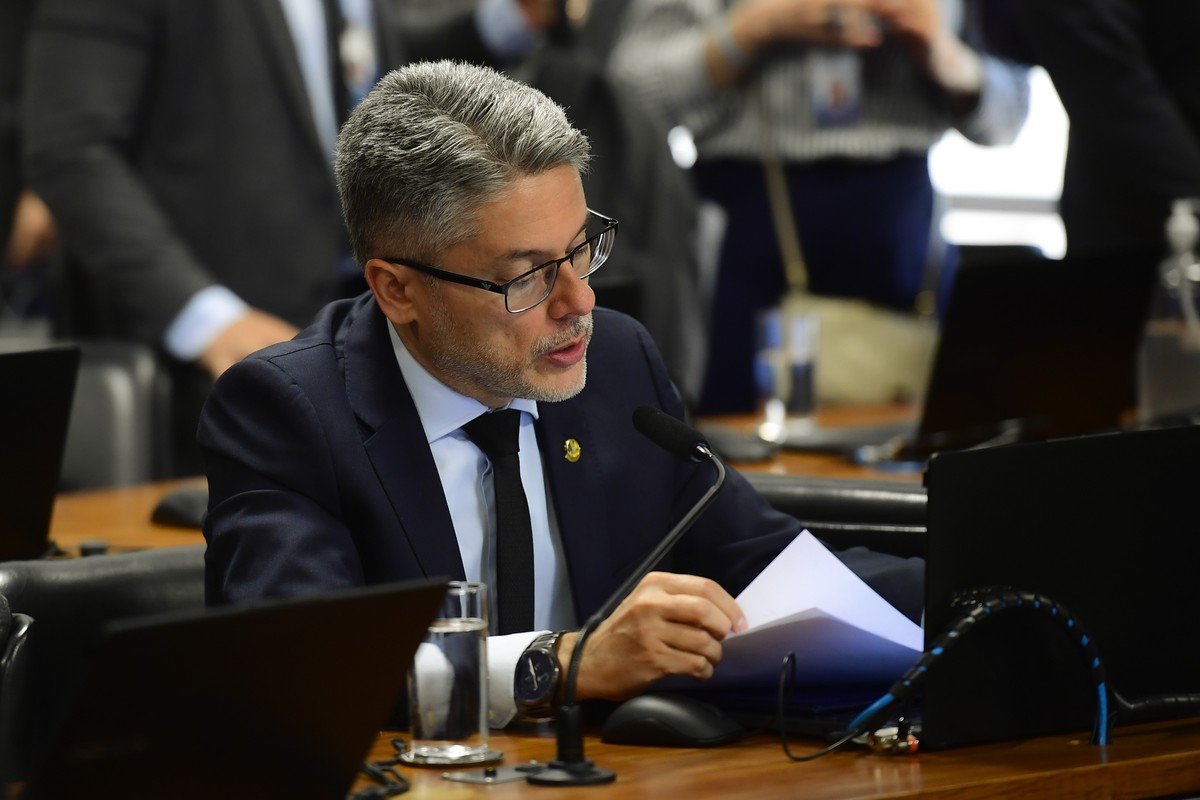
Senate Committee Unanimously Rejects Shielding PEC and Buries Initiative Supported by Centrão

-

Flamengo and PSG have faced each other three times; check out their record
-

Indonesia Open Footgolf Tournament: Comedian Oki Rengga Admits Addiction, Wants to Become a Professional Athlete
-

Shameful Incident in Punjab! Landlord Rolls Tenant’s Daughter
-

Virgil van Dijk Expresses Desire for Mohamed Salah to Stay at Liverpool
Deixe um comentário