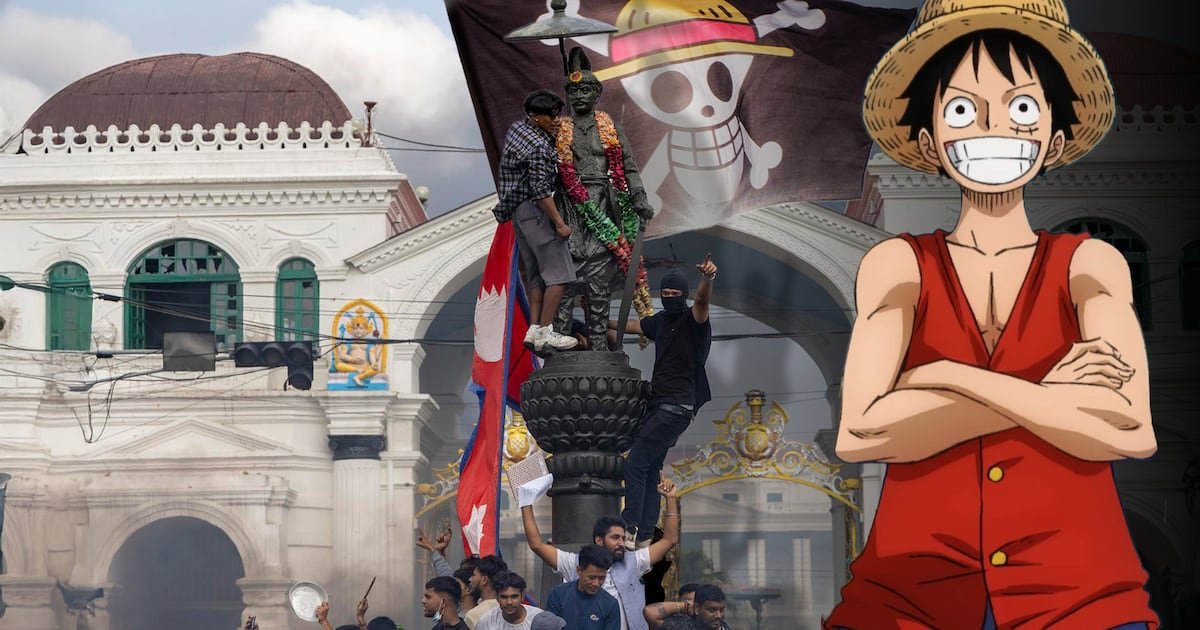
The youth uprising in Nepal, organized organically through social media, has caught attention after successfully toppling the Nepalese government; previously, in Indonesia, students rose up in protest following the passage of controversial bills related to corruption and labor laws. In both countries, the symbol of ‘One Piece,’ a popular manga and anime series, has been prominently featured during the protests. The iconic flag from ‘One Piece’ has become a unifying symbol for the youth movements in Nepal and Indonesia.
The straw hat as seen in ‘One Piece’ is a powerful representation of solidarity and resistance. Young people in Nepal and Indonesia have adopted it as a symbol of their fight against oppression and injustice. By waving the straw hat flag, they are signaling their commitment to standing up for their rights and demanding change from their governments. The use of this fictional flag in real-world protests highlights the influence of popular culture in inspiring and mobilizing youth-led movements.
‘One Piece’ tells the story of a group of pirates led by the protagonist Monkey D. Luffy as they search for the ultimate treasure, the One Piece. The themes of friendship, freedom, and adventure resonate deeply with young audiences around the world. The flag from the anime, a straw hat with a red band, has now transcended its fictional origins to become a potent symbol of youthful rebellion and activism in Nepal and Indonesia.
Despite the political differences between Nepal and Indonesia, the use of the ‘One Piece’ flag has created a sense of solidarity among the youth in both countries. It serves as a reminder that despite geographical and cultural barriers, young people can come together under a common cause. The creative use of this symbol has not only drawn attention to the protests but has also sparked discussions about the power of popular culture in shaping movements for social change.
In a world where activism and pop culture intersect, the use of symbols like the straw hat from ‘One Piece’ reflects a new form of protest language. As young people continue to push for reform and justice, they are harnessing the power of visual symbols from anime and manga to amplify their voices and connect with like-minded individuals globally. The utilization of fictional icons in real-world activism underscores the creativity and innovation driving modern youth movements.


Deixe um comentário