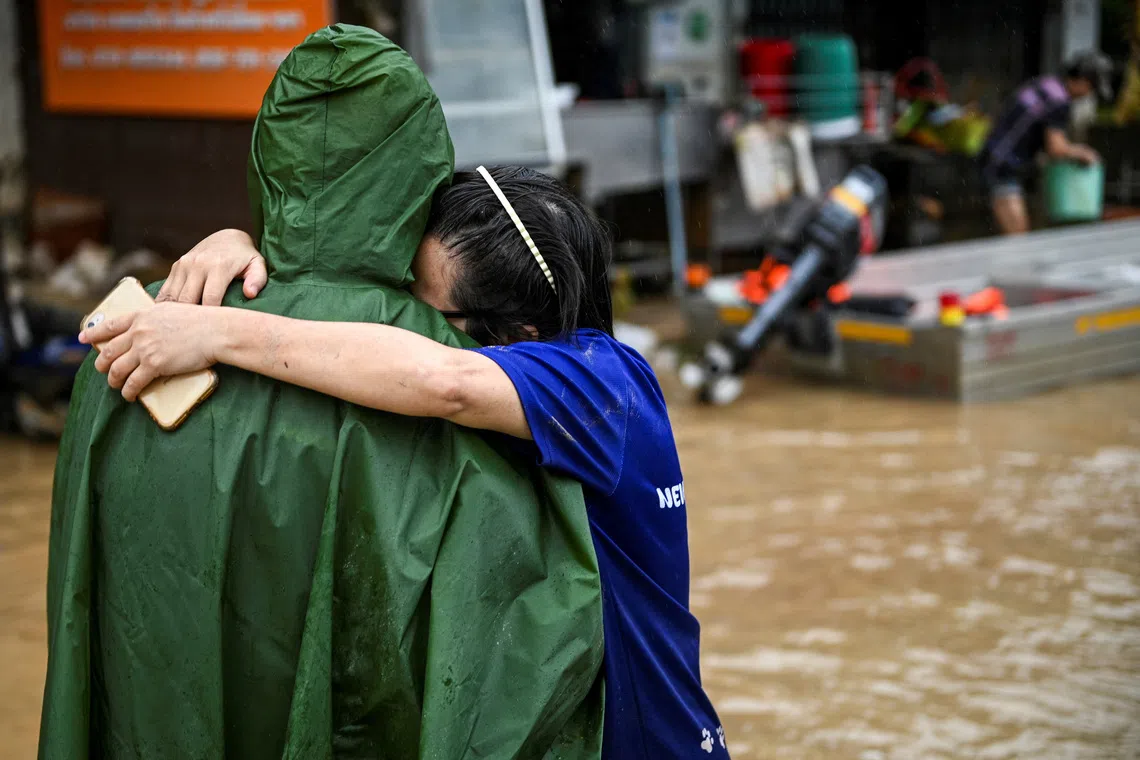
Rescuers in Thailand and Malaysia are stepping up their efforts to provide relief as severe floods continue to devastate the region. In Thailand, at least 33 people have lost their lives due to the floods, with thousands seeking refuge in evacuation centers. To assist those in need, the Thai government plans to use drones to airdrop food parcels in areas that are difficult to reach.
In Malaysia, rising floodwaters have led to the evacuation of over 34,000 individuals, with many others still stranded in flooded areas. The use of container lorries has been crucial in bringing people to safety, especially in regions where smaller vehicles cannot navigate the flooded roads.
Meanwhile, Indonesia’s province of North Sumatra has been hit by a tropical cyclone, resulting in the deaths of at least 28 people. Rescue efforts are hindered by power outages and damaged infrastructure, making it challenging to reach those in need of assistance.
The current extreme weather patterns in Southeast Asia are believed to be influenced by the interaction of multiple weather systems, including typhoons in the Philippines and the formation of cyclones in the region. Global warming is also a contributing factor, as higher sea temperatures can intensify tropical storms and lead to more frequent and severe weather events.
In Thailand, the deployment of helicopters, planes, and trucks has been instrumental in delivering essential supplies to flood-affected areas. The country’s military has been actively involved in rescue operations, utilizing aircraft carriers to provide air support and deliver aid to those in isolated areas.
As the rescue efforts continue, authorities are urging the public to remain vigilant and cooperate with emergency services to ensure the safety of everyone affected by the natural disasters in the region. The challenges posed by the ongoing floods and cyclone serve as a reminder of the importance of preparedness and swift action in the face of environmental emergencies.





Deixe um comentário