The recent naval movement by the United States in Latin America and the Caribbean, which became alarming in the past week, took an unexpected turn. The Iwo Jima Amphibious Readiness Group had to suspend its activities and return to the naval base in Norfolk, Virginia, due to the meteorological risks posed by Hurricane Erin. It was not clear if the fleet had approached the Venezuelan coast, as promised, before turning back.
The return took place on Tuesday morning, according to a ship observer—the initial arrival prediction was for Wednesday morning. The amphibious group had departed Norfolk five days earlier, on their first mission of this kind in eight months, with a considerable force. They were preparing to operate in the Caribbean under the U.S. Southern Command’s command, after embarking Marines from the 22nd Marine Expeditionary Unit at Camp Lejeune, North Carolina.
In total, about 4,500 sailors and Marines, along with three amphibious assault ships—the USS Iwo Jima (LHD-7), USS Fort Lauderdale (LPD-28), and USS San Antonio (LPD-17)—were slated to be part of the operation, considered by experts as an uncommon show of force for anti-drug trafficking actions—the official justification for the deployment. According to the U.S. Navy, all ships returned to port to avoid the effects of Hurricane Erin, which reached category 5 over the weekend.
According to the U.S. National Weather Service, the storm is expected to affect areas of Virginia and Maryland, with strong winds forecasted starting Thursday. The formation was, on Tuesday morning, off the coast of the Bahamas. The fleet’s return was a precautionary measure, following the expected initial impacts on the coastal region, as per the Navy.
In addition to the amphibious squadron, three destroyers—the USS Gravely, USS Jason Dunham, and USS Sampson—equipped with the Aegis missile system, were deployed to the region, according to sources connected to the operation. A nuclear attack submarine, P-8 Poseidon aircraft, and other surveillance means complete the setup. These assets, experts point out, enhance intelligence capability and selective targeting, should the U.S. government choose to adopt specific actions.
The naval deployment came after an obscure directive from President Donald Trump at the beginning of the month, ordering U.S. forces to combat foreign drug cartels. This raised fears of intervention in Venezuela—with whom the U.S. severed diplomatic relations in 2019, during Trump’s first term. On Tuesday, White House spokesperson Karoline Leavitt stated that the U.S. will use ‘all force’ against Nicolás Maduro’s regime, accusing him of leading a drug-trafficking cartel into U.S. territory, after the U.S. Treasury included the so-called ‘Cartel de los Soles’ on the list of terrorist organizations in July, offering a $50 million reward for the capture of the Maduro leader.
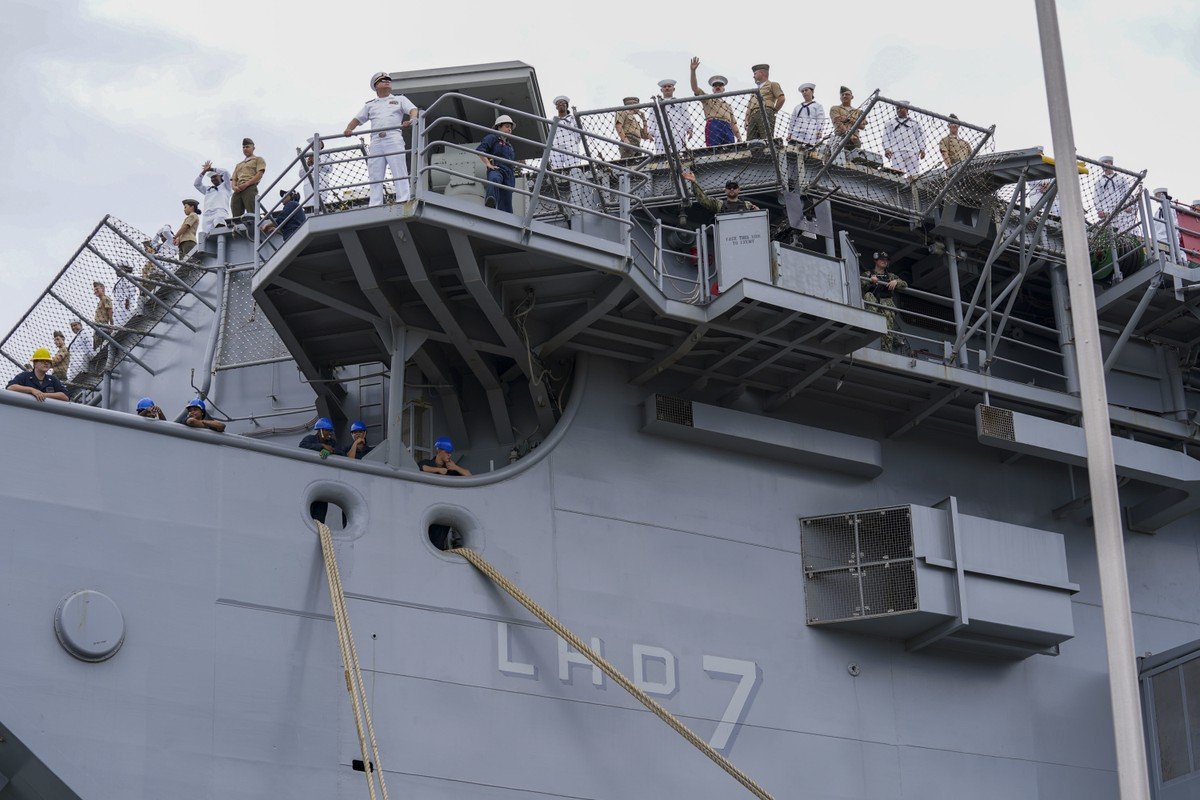
U.S. Navy Fleet Retreats Due to Hurricane After Increased Tensions with Venezuela in Caribbean

-

Flamengo and PSG have faced each other three times; check out their record
-

Indonesia Open Footgolf Tournament: Comedian Oki Rengga Admits Addiction, Wants to Become a Professional Athlete
-

Shameful Incident in Punjab! Landlord Rolls Tenant’s Daughter
-
Virgil van Dijk Expresses Desire for Mohamed Salah to Stay at Liverpool
Deixe um comentário