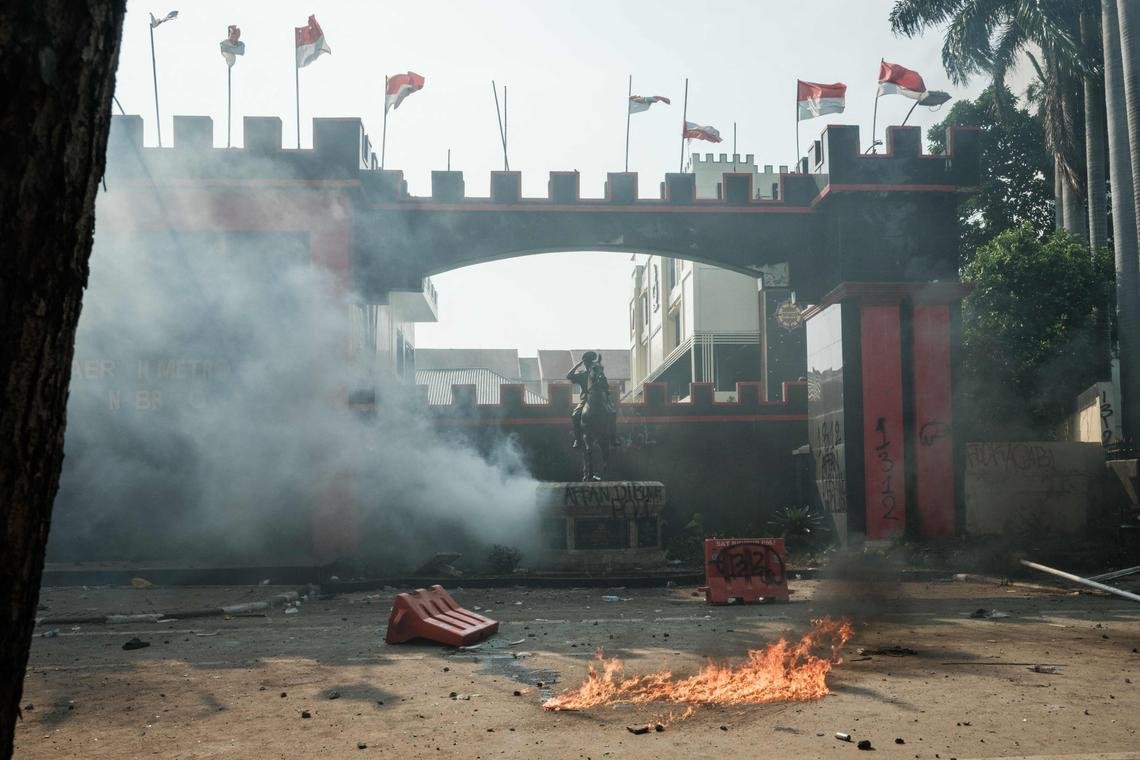
The streets of Indonesia have been engulfed in turmoil as citizens express their discontent over lawmakers’ privileges. What began as peaceful protests soon turned violent, with molotov cocktails and tear gas becoming common sights. The situation escalated further as suspicions grew regarding the involvement of provocateurs in instigating violence. The focus has shifted from the original grievances of the people to the question of who is behind the unrest.
Signs of external influence have emerged, leading to theories of orchestrated attempts to disrupt the protests. Reports of organized groups, referred to as ‘mafias,’ infiltrating the demonstrations have sparked concerns about hidden agendas at play. The sudden emptying of a previously crowded bus stop, only to be followed by the sudden appearance of violent actors, has raised suspicions of coordinated actions to fuel chaos. As tensions mount, authorities are under pressure to uncover the truth behind the escalating unrest.
The use of molotov cocktails and tear gas has become symbolic of the escalating conflict between protesters and security forces. Images of burning cocktails and clouds of tear gas shroud the streets, painting a grim picture of the unrest gripping the nation. With the spotlight now on the role of provocateurs in stoking the flames of protest, the original demands of the citizens seem to have taken a backseat.
The situation in Indonesia serves as a reminder of the complex dynamics at play in mass protests. From genuine grievances to potential manipulation by external forces, the protests have evolved into a multifaceted challenge for the authorities. As the country grapples with the fallout of the unrest, the need to address the root causes of the protests and identify those responsible for inciting violence becomes increasingly urgent.
While the country attempts to navigate through the chaos, the underlying question remains: who stands to benefit from the unrest? As speculations swirl and suspicions grow, the true instigators behind the protests are yet to be uncovered. In the midst of uncertainty, one thing is clear – Indonesia is facing a critical moment in its history, one that will shape its future trajectory.




Deixe um comentário