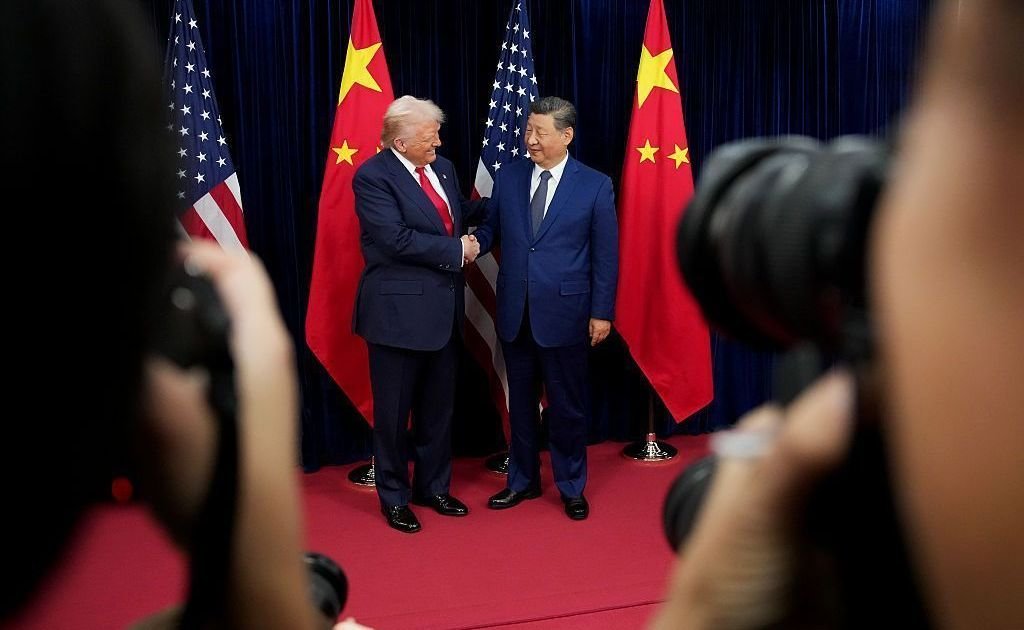
Donald Trump took a tough stance against China, imposing tariffs so high they almost equated to a trade embargo. Furthermore, he restricted the Asian country’s access to Western technologies, engaging in an economic war with his usual air of self-confidence. However, China fought back. It retaliated against the US by halting the sale of rare earths and ceasing to buy soybeans from American producers — part of Trump’s voter base.
After months of mutual hostilities, Donald Trump and Xi Jinping announced a one-year truce, where everything would return to the way it was before. At first glance, it may seem that this dispute only led to a return to square one. Nevertheless, in reality, the situation got a little worse: the United States emerged weaker, while China emerged stronger, as it showed in practice that Trump was the first to back down.
Currently, the United States and China are still in talks, but each keeps a “big gun” on the table, promising only not to point it at each other for the next 12 months. What they have made clear is their desire to gradually reduce mutual dependence. However, this process of economic decoupling is considered risky, complex, and potentially disruptive to the global economy.
The central points fueling the confrontation between the two powers — currently confined to the commercial and economic field — remain unchanged. For Brazil, the scenario also remains delicate and dangerous, as in this war between giants, our main exports are destined for China, while a large part of the inputs that sustain Brazilian agribusiness come from the United States. Thus, the country attempts, with difficulty, to avoid having to choose a side.





Deixe um comentário