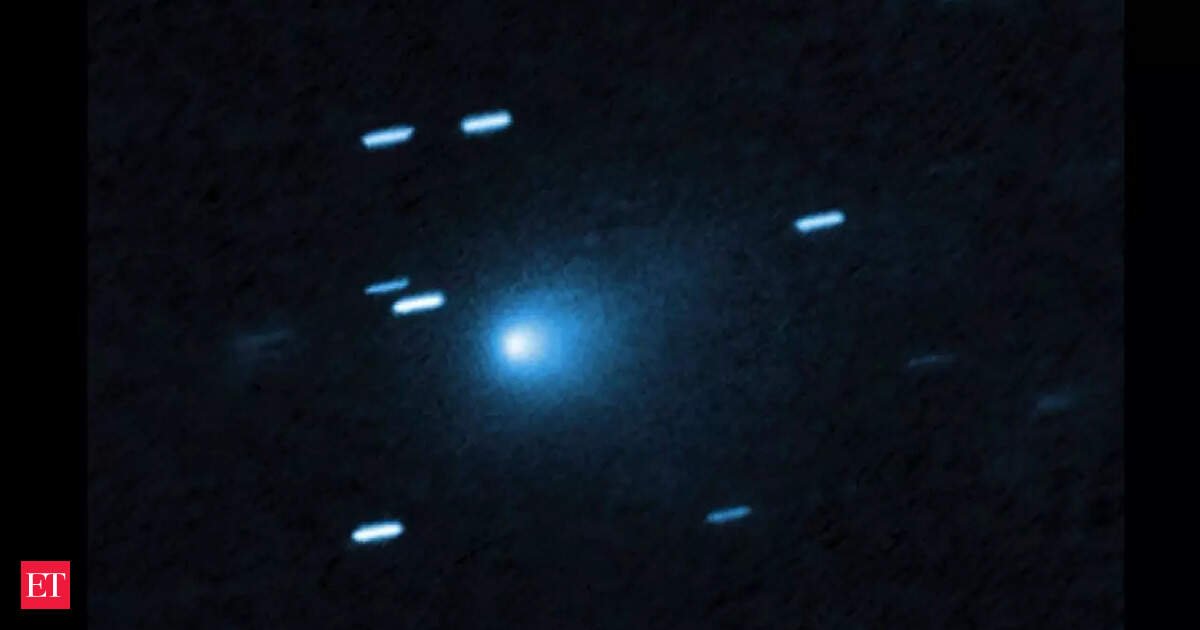
NASA’s James Webb Space Telescope recently conducted a study on the interstellar comet 3I/ATLAS, aiming to unravel the mysteries of comets as they approach the sun. Observations from the telescope revealed remarkably high levels of carbon dioxide in the comet’s coma, indicating a significant presence of this substance in its core. Scientists are intrigued by this discovery as it offers valuable clues about the origins and composition of the comet, potentially shedding light on the formation processes in other star systems.
Studying comets like 3I/ATLAS plays a crucial role in deepening our understanding of the conditions present in different star systems. By analyzing the composition of these celestial bodies, researchers can draw parallels to the early stages of our solar system’s formation, providing valuable insights into the broader astronomical context. The information gathered by NASA’s James Webb Space Telescope contributes to a growing body of knowledge about comets and their behavior as they interact with various cosmic phenomena.
The abundance of carbon dioxide in comet 3I/ATLAS holds significant implications for our understanding of these celestial objects. Scientists speculate that the presence of such high levels of carbon dioxide may be linked to the comet’s long journey through interstellar space, possibly originating from distant regions beyond our solar system. This finding underscores the importance of continued research into comets like 3I/ATLAS to unlock the secrets of their unique composition and intricate evolution.
NASA’s James Webb Space Telescope’s exploration of the 3I/ATLAS comet represents a groundbreaking milestone in the study of interstellar objects. The detailed observations and analysis conducted by the telescope provide a wealth of data that scientists can use to further investigate the nature of comets and their interactions with various cosmic environments. By delving into the complexities of comets as they approach the sun, researchers are uncovering valuable insights that contribute to our broader understanding of the universe.





Deixe um comentário